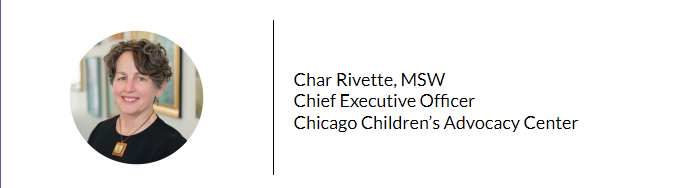
Dear Friends and Supporters, 

As we begin FY26 (and look ahead to celebrating our 25th year of service to Chicago’s children and families in 2026), it is my pleasure to share some exciting news! 

Since 2001, Chicago Children’s Advocacy Center (ChicagoCAC) has served as Chicago’s front-line responder to reports of child sexual abuse. Through collaboration with public, private, and community partners, we work every day to ensure the safety, health, and well-being of abused children and survivors of domestic and sexual violence. 

Today, we are proud to deepen our commitment to collaboration by welcoming Imagination Theater into the ChicagoCAC family as a new program. 

Imagination Theater has been a longtime partner through its involvement in our Chicago Prevention Alliance and shares our strong commitment to education and prevention. For nearly 60 years, they have delivered original, dynamic, and participatory theater programs that help young people explore social emotional issues they face. Using theater as a tool, they help make students more aware of an issue through scripted scenes. Students become more knowledgeable around that issue by participating in facilitated discussions.  Finally, students are able to apply that knowledge by participating in role-plays with the performers.  

In 1985, Imagination Theater launched a Child Sexual Abuse Prevention Program that has become a central part of their mission. With prevention education being a key pillar of our work at ChicagoCAC, this partnership brings new opportunities to expand our reach and impact. Together, we will be able to educate even more children on how to recognize, prevent, and report abuse. 

Beginning this month, the Imagination Theater Program will be housed within our Education, Outreach, and Prevention department, led by Director Steve Leaver. Through this integration, we will: 

  • Expand our reach by offering interactive programs to more schools and youth-serving organizations across Chicago and beyond. 
  • Enhance our expertise by combining Imagination Theater’s creative, theatrical approach with our proven prevention strategies. 
  • Innovate by developing new, story-based experiences that amplify children’s voices and inspire communities to take action against abuse. 

To the dedicated team, volunteers, and supporters of Imagination Theater, welcome to ChicagoCAC. We are honored to carry forward your legacy of creativity and education. And to our existing ChicagoCAC community, thank you for your continued support. Partnerships like this are possible because of your commitment to our mission and the essential work we do. 

As we look to the future, we know that preventing abuse and supporting survivors requires all of us. True change happens when we collaborate, embrace new ideas, and remain committed to long-term solutions. Our new partnership with Imagination Theater will help us reach more children and young people, strengthening our communities and bringing us closer to our vision of a future free from abuse. 

With gratitude, 

April is National Child Abuse Prevention Month—a time to raise awareness, share resources, and strengthen our collective commitment to keeping children safe. In recognition of National Child Abuse Prevention Month, we spoke with Steve Leaver, ChicagoCAC’s Director of Education, Outreach, and Prevention, about how his team is leading citywide efforts to empower adults and protect children.

To learn more about what you can do to stop human trafficking, check out our upcoming webinar, How To Talk About Prevention, on April 18th to learn how you can keep youth safer and invigorate communities to end child sexual abuse for future generations.

***

Tell us about your role at ChicagoCAC.

I am the Director of Education, Outreach, and Development at Chicago Children’s Advocacy Center. I oversee curriculum development, program evaluations, and collaborations with partners. I manage a team of four educators who bring training to professionals and caregivers all around the city.  

Who do you work with (parents, teachers, community organizations) and what does that outreach look like?

We do trainings for parents, educators, librarians, park district employees, as well as professionals who work in the field of child sexual abuse prevention. We go into communities to provide information at tabling events, we conduct listening sessions, and work with a variety of partners including Community in Schools of Chicago, Chicago Public Schools, the Chicago Park District, Chicago Public Libraries, and others to get this training out to the communities.  

Why is child abuse prevention so important, and what impact does early prevention have on children and families?

1 in 10 children will experience sexual abuse before they reach the age of 18. It is important that we give adults the tools on how to talk to children about what sexual abuse is, how to protect themselves and what their rights are when it come to their own bodies. Having these conversations start at an early age not only gives kids tools and knowledge on what is safe and unsafe, but it builds a sense of trust and shows kids that they can come to adults with questions they have when it comes to sex, their bodies, and relationships down the road. It also establishes what consent is at a very early age so when kids grow into their teenage years and begin relationships, they already have a good sense of what consent looks like. Often times, there is a strong sense of shame that can stay with a survivor of sexual abuse for years. Prevention also is about making children realize that it is never their fault if they experience abuse, thus hopefully, emboldening them to find a safe adult they trust to come to if they ever experience abuse and begin the healing process more quickly.  

What message do you want to share with Chicagoans about the role we all play in keeping kids safe?

We believe that adults are responsible for keeping kids safe and thus, every adult should be trained when it comes to preventing sexual abuse. Even if you don’t have children of your own, you may end up being that safe adult for a child who you teach, coach, or mentor. You may have nieces or nephews, or maybe are a trusted neighbor. It’s important that everyone knows how to recognize signs of abuse and what to do if a child should ever disclose that they are being abused.  

What are some simple but effective ways adults can help prevent child abuse in their own communities?

Start having conversations with kids and adults in your own communities. The more we are able to talk about this, the safer our communities will be. Many times, adults are afraid or don’t know how to talk to children in a developmentally appropriate way. Learning about what is normal vs. abnormal behavior at different developmental stages and what language to use with kids when talking about body parts and keeping themselves safe is a great first step to reducing those fears and begin the conversations.  

If someone suspects abuse or has concerns about a child’s safety, what should they do?

If someone suspects abuse or has concerns about a child’s safety, they should call the Child Abuse Hotline at 1-800-252-2873 or if the child’s life is in danger, dial 911.  

How can people get involved with ChicagoCAC’s prevention efforts or access resources to learn more?

People can get involved by exploring our free prevention resources here or by registering for an upcoming training here. Whether you’re a caregiver, educator, or community member, we can all help build safer communities for children.

April is Child Abuse Prevention Month, and ChicagoCAC is so excited to be creating community and raising awareness around how to recognize, respond to and report child sexual abuse. We’re once again partnering with our longtime collaborators, Chicago Public Library, to bring resources and fun to neighborhoods across the city in a series of events for April. Join us on one of the following dates to hear more about our prevention work, discover tips to be a safer adult for the youth in your life, and make some meaningful crafts to inspire survivors and those who love them.

April 5th

Richard J. Daley Branch – Chicago Public Library, 3400 S. Halsted

1 – 4 PM

Activities include a personal talk from Community Advisory Council member Jeanine Otte in addition to a prevention story time for younger children and crafts such as writing love letters to survivors of sexual abuse and assault and making prevention-focused zines.

April 12th

Body Safety for Kids – Rudy Lozano Branch – Chicago Public Library, 1805 S. Loomis St

1:30 – 2:30 PM


Join Carolina Morales, bilingual education specialist with Chicago Children’s Advocacy Center, to hear the story My Body! What I Say Goes! Families learn about body safety, feelings, consent, safe and unsafe touch and respectful relationships. Snacks and drinks are provided. 

For kids 8 and up and their caregivers.

Únase a Carolina Morales, especialista en educación bilingüe del Centro de Defensa de los Niños de Chicago, para escuchar la historia ¡Mi cuerpo! ¡Lo que digo se hace! Las familias aprenderán sobre la seguridad corporal, los sentimientos, el consentimiento, el contacto seguro e inseguro y las relaciones respetuosas. Se proporcionarán refrigerios y bebidas. 

Para niños a partir de 8 años y sus cuidadores.

April 16th

Rudy Lozano Branch – Chicago Public Library, 1805 S. Loomis St

11 AM – 1 PM

Grab resources from ChicagoCAC, write love letters to survivors of sexual abuse and assault, and make prevention-focused zines.

April 21st

Portage-Cragin Branch, Chicago Public Library, 5108 W Belmont Ave

4 – 6 PM

Grab resources from ChicagoCAC, write love letters to survivors of sexual abuse and assault, and make prevention-focused zines.

Questions? Email info@chicagocac.org.

By Dr. Dia Pfleger, Chief People & Culture Officer

“Injustice anywhere is a threat to justice everywhere.”
— Martin Luther King Jr., Letter from Birmingham Jail, 1963

If Martin Luther King Jr. were alive today and responding to the pushback on Diversity, Equity, Inclusion, Accessibility, and Belonging (DEIAB), his words would likely echo many of the principles found in his iconic “I Have a Dream” speech, while adapting those ideals to the challenges of the present day. He might integrate the themes of justice, equality, and belonging with a renewed call for inclusive practices that affirm the dignity and potential of every individual. Here’s how elements from his “I Have a Dream” speech could be adapted to reflect the language of DEIAB:

Commitment to Justice, Equity, and Human Dignity

In his “I Have a Dream” speech, King spoke of his vision for a future where people “will not be judged by the color of their skin but by the content of their character.” In today’s context, King would likely build on this idea to emphasize that, while the color of one’s skin is one of many characteristics, society must move beyond such superficial divisions and confront the deep-rooted inequities tied to race, gender, disability, and other aspects of identity.

He might say:

“I have a dream that one day, this nation will rise up and live out the true meaning of its creed—that all people, regardless of race, gender, ability, or background, are endowed with the right to live with equity, dignity, and access to opportunity. That we, as a collective, will build a world where every individual—regardless of their identity—can find a sense of belonging.”

The Importance of Education and Awareness

King believed deeply in the power of education to change hearts and minds. He might argue that DEIAB initiatives play an essential role in educating individuals and organizations about the long-lasting effects of systemic oppression and the importance of creating inclusive environments.

In the spirit of his speech, he could say:

“I have a dream that one day our schools, our workplaces, and our communities will not just educate for knowledge, but for the values of equity, inclusion, and accessibility. That every individual, regardless of their background, will have the tools and the support to achieve their fullest potential, and that we will all learn to see the humanity in each other.”

Nonviolent Resistance to Oppression

King’s advocacy for nonviolent resistance to injustice remains a cornerstone of his philosophy. In today’s context, he might encourage peaceful dialogue and protest against the forces pushing back against DEIAB initiatives, urging society to come together in a collective struggle for justice without resorting to division or animosity.

He could say:

“I have a dream that one day, we will resist oppression and inequality not with hate, but with love and understanding. That the pushback we see today will not defeat our resolve to build a more just and inclusive world. Through nonviolent action, peaceful dialogue, and unwavering commitment, we will bring about a society that honors every person’s right to be heard and valued.”

Rejecting Colorblindness and Ableism

In his “I Have a Dream” speech, King dreamed of a day when people would not be judged by the color of their skin. Today, he would likely extend that sentiment to the broader conversation around ableism, gender, and other intersecting identities. He might stress that true progress comes from acknowledging and addressing the unique challenges that different groups face, rather than ignoring them.

He might add:

“I have a dream that we will no longer cling to the illusion of a colorblind or ableist society, where the challenges of marginalized groups are invisible. Instead, I dream of a world where we acknowledge those challenges and work together—through DEIAB efforts—to break down barriers and ensure everyone has an equal chance to flourish.”

Fostering Belonging and Collective Responsibility

King’s dream was a world where all people could live together in harmony. In the context of DEIAB, he would likely emphasize that fostering a sense of belonging goes beyond representation—it involves creating spaces where individuals can thrive, contribute, and feel valued for who they are.

He might say:

“I have a dream that one day, our society will be one where all people, regardless of their background or identity, will feel a true sense of belonging. Where every individual is empowered to bring their whole selves to the table, and where the responsibility for creating that space is shared by all.”

In summary, Martin Luther King Jr. would likely see DEIAB as an extension of the values he championed during the Civil Rights Movement—values that sought to dismantle systemic injustice and create a more equitable society for all. His “I Have a Dream” speech would serve as a foundational vision for a world where justice, inclusion, accessibility, and belonging are not only aspirational goals but active realities that all of us are called to work toward, together.

“Thank you to Char Rivette, CEO of Chicago CAC, and the Board of Directors for your continued commitment and unwavering support of the DEIAB movement. Let’s work together to keep the dream and hope of Dr. Martin Luther King Jr. alive.”

By Courtney Bunn, Human Trafficking Program Manager

January marks National Human Trafficking Prevention Month, a time to unite, share knowledge, and strengthen prevention efforts.

This year’s theme, “Connecting the Dots,” highlights the importance of taking a holistic approach to preventing trafficking, addressing root causes and vulnerabilities while recognizing its intersection with other forms of violence and social issues. In honor of National Human Trafficking Prevention Month, our Human Trafficking Program Manager, Courtney Bunn, shares the work happening within the Clinical Services department and the agency at large to combat human trafficking.

To learn more about what you can do to stop human trafficking, check out our upcoming webinar, Human Trafficking Prevention: Bridging Awareness and Action, on January 17th to learn how you can recognize trafficking and promote best practices for prevention.

***

As the Human Trafficking Services Program Manager, I am excited to share the important work happening at Chicago Children’s Advocacy Center to address human trafficking. In prior years, ChicagoCAC had a select group of staff dedicated to trafficking response. Over time, these staff paved the way for the current trafficking program by making an impact in the anti-trafficking community in the Chicagoland area. In 2024, ChicagoCAC reached a milestone by expanding and formalizing the Human Trafficking Program within the center!

Unfortunately, the reality of human trafficking and child exploitation is ever-present, and the need for specialized services for this population has grown in Chicago as referrals have increased. To meet this demand, ChicagoCAC took the necessary steps to grow our trafficking response by creating a distinct program and adding additional staff to better meet the growing needs of our clients. Having a dedicated team and centralized leadership will allow us to make an even bigger difference in the lives of the youth and families we serve. Most importantly, it allows us to identify and extend services to even more impacted youth.

The Human Trafficking Services Program

The expanded Human Trafficking (HT) Services Program is held in the Clinical Services Department. Working in tandem with clinical service providers in this department, the Human Trafficking team provides tailored services to youth and their families in alignment with the Family Hope Center’s standards of excellence. Read more here about how our Family Hope Center provides children and caregivers with the services they need to heal. Unique clinical considerations of trafficking cases are prioritized and enforced by our mental health and social service professionals.

The Human Trafficking team consists of caseworkers, including HT Therapists and HT Specialists, who receive clinical supervision from the HT Manager. All cases involving human trafficking are eligible for HT specific service programming, which provides clinical services from these specialized caseworkers. Factors such as ongoing risk levels as well as individual client needs and preferences are assessed to determine the appropriate service and caseworker assignment.

No matter which caseworker the child is assigned to, all services include mental health and social service support. As an agency we prioritize making services accessible for all clients to receive, which is why having multiple language and location options is critical to success. Many of our caseworkers are bilingual Spanish speaking and can offer services in community settings to reduce barriers and increase client engagement. Additionally, our services can be long-term to address the lasting elements of risk and trauma associated with trafficking.

HT Therapists

Based on research and field experience, we recognize exploitation typically occurs in the context of close relationships. Psychological coercion, such as trauma-bonding and grooming, frequently plays a role, often during early developmental stages. The mental health implications of this type of trauma are complex and delicate, requiring specialized approaches.

Our HT Therapists are trained and supervised on issues related to trafficking and exploitation. When a child is ready to start processing their trafficking-related trauma history, they are assigned to one of these clinicians. The clinician provides evidence-based therapeutic support to foster hope and healing.

HT Specialists

Beyond traditional mental health needs, other vulnerabilities are often exploited in situations of trafficking. This can look like anything from lack of resources to caregiver support issues. When these needs go unmet, the likelihood of ongoing or repeated exploitation grows.

HT Specialists offer a combination of clinical case management, intensive advocacy, and other trauma- informed interventions to create a specialized service plan unique to each child’s situation. These services focus on safety and stabilization, ultimately contributing to building wholistic wellness and healthy relationships in children’s lives.

Our Approach

ChicagoCAC’s commitment to fighting Human Trafficking extends beyond our dedicated services, as we work closely with all multi-disciplinary team (MDT) members. This includes our Family Advocates, Forensic Interviewers, Special Investigations Unit, and Child Protective Services. Additionally, the HT program plays a role in agency-wide and community efforts to educate and collaborate with others doing anti-trafficking work.

Training/Consultation

With a focus on the clinical treatment of trafficked youth, we offer training and consultation for providers working with impacted populations. Our goal within ChicagoCAC is to ensure every department is trained and confidently able to respond to cases of trafficking within their individual roles, including making referrals for HT services. Through the agency’s Education, Outreach, and Prevention team, we also offer training to partners and community members to prevent trafficking and exploitation.

Check out our upcoming webinar, Human Trafficking Prevention: Bridging Awareness and Action, on January 17th to learn how you can promote best practices and prevent human trafficking.

Screening & Assessment

ChicagoCAC addresses child trafficking through its investigative work on child maltreatment cases. Because there is significant overlap between child sexual abuse and potential trafficking, we take great care to review every case we receive for signs of human trafficking. Using validated screening tools and our expertise, we screen each case on a continuum to determine considerable risk of trafficking victimization. These at-risk cases inform our service programming.

To learn more about the indicators of human trafficking that we screen for, follow ChicagoCAC’s social media throughout the month of January.

Networks

We are involved in many local and national collaborative networks to continue learning from and contributing to larger anti-trafficking efforts. Currently, members of our team hold leadership roles on the Cook County Human Trafficking Task Force and serve on the Illinois Statewide Human Trafficking Task Force. Additionally, as Program Manager, I was admitted as a member of the DCFS Children’s Justice Task Force as a HT representative, expanding our contribution to discussions on child abuse and exploitation.

We hold so much hope for 2025 as we move forward with a team of two HT Specialists and two HT Therapists. By maximizing caseloads, we aim to reduce child trafficking and exploitation by implementing trauma-informed specialized services for the children in our care. Thank you to ChicagoCAC and its supporters for standing with us as we evolve and strengthen our program!

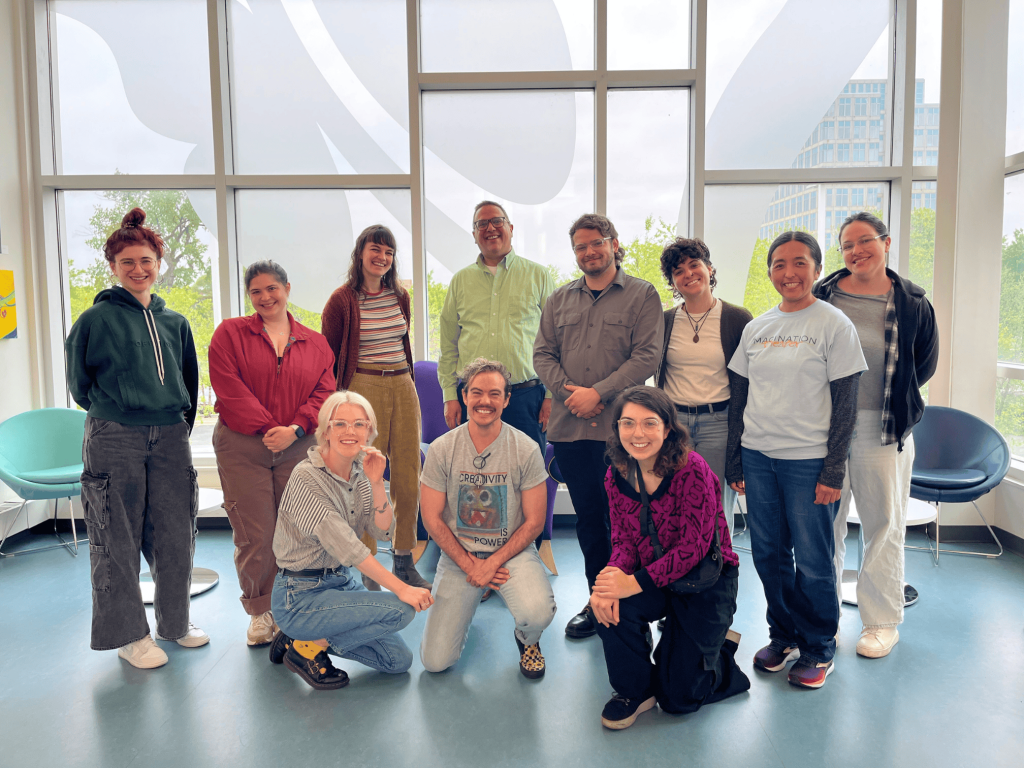
Washington, ComEd Senior Vice President, Customer Operations, to Support Nonprofit’s next phase of growth

CHICAGO, ILChicago Children’s Advocacy Center (ChicagoCAC) announced today that Melissa Washington has been elected to serve as President of the nonprofit organization’s Board of Directors. Washington, Senior Vice President of Customer Operations and Strategic Initiatives for ComEd (an Exelon company), will serve a three-year term effective July 1, 2024. 

Chicago Children’s Advocacy Center is the city’s front-line responder to reports of child sexual abuse. Since its founding in 2001, the organization has served more than 50,000 children by providing services and resources to support children and families in healing from abuse and restoring their lives.

“Melissa has been a member of our Board since 2013 and has served in various leadership roles including chairing our development committee and Luminary Award Dinner host committee,” said Char Rivette, ChicagoCAC CEO. “Because of her longevity and unwavering commitment to support, Melissa has a remarkable depth of understanding about where we’ve been, where we are now, and where we’re going. Melissa believes in our vision, and I’m honored to have her leadership now as board president. I look forward to actively working together to expand our mission and propel our agency into the next phase of growth and impact for the city of Chicago.

Washington joined Exelon in 2003 and has held several roles of increasing responsibility for Exelon and ComEd throughout her tenure with the company. In her current role as Senior Vice President, Customer Operations and Strategic Initiatives, she oversees all aspects of ComEd’s customer operations, including its energy efficiency programs, customer channels and related technology, large customer services, customer call center, field operations and customer financial operations.

Outside of ChicagoCAC, Washington also serves as a board member of the Metropolitan Planning Council, the Civic Consulting Alliance, and Smart Electric Power Alliance, as well as board chair of Leadership Greater Chicago, where she is also a fellow. Washington earned her MBA from Keller Graduate School of Management and a Bachelor of Arts degree in finance from Lewis University.

Washington succeeds Justin Hoss, Global Lead Partner, KPMG LLP, who served as ChicagoCAC’s board president since 2017.

“I am thrilled to welcome Melissa as the new board president of Chicago Children’s Advocacy Center,” said Hoss. “She brings a wealth of experience, a compassionate heart, and a visionary mindset to the role. Under her board leadership, we are confident that ChicagoCAC will reach new heights in making a meaningful impact for the children in the Chicago community.”

Melissa is the first woman and first African American to serve as President of the Board of Directors for Chicago Children’s Advocacy Center. During her term, she will support and provide oversight for the agency’s governing operations and strategic initiatives including donor cultivation, annual fundraising events, and the launch of Chicago Advocacy Network for Hope (CAN Hope), a multi-agency, multi-disciplinary, co-located center that ChicagoCAC is opening to provide services to adult survivors of domestic violence, sexual assault and human trafficking.

“It is an honor to support the Chicago Children’s Advocacy Center (Chicago CAC), an organization dedicated to protecting the safety, well-being, and futures of Chicago’s children,” said Washington. “Chicago CAC’s mission to reduce trauma for children by bringing together child protection staff, law enforcement, medical experts, family advocates, and mental health professionals aligns with ComEd’s commitment to supporting our communities. I am proud to serve on the board and contribute to Chicago CAC’s efforts alongside their dedicated team.”

To learn more about Melissa or for more information about Chicago Children’s Advocacy Center, go to www.chicagocac.org.

# # #

About Chicago Children’s Advocacy Center
Chicago Children’s Advocacy Center and its partners are the front-line responders in Chicago to reports of child sexual abuse and other serious child maltreatment. Since opening in 2001, the organization has served more than 50,000 children and provided sexual harm prevention education to thousands of adults and students.

For this year’s Child Abuse Prevention Month and #PinkyPromise, we’re also holding space for another April campaign, Sexual Assault Awareness Month and #BuildingConnectedCommunities. Every April we paint one of our pinky nails blue to honor and spread awareness for the 1 in 10 children who experience child sexual abuse before they turn age 18. When we hold additional space for adults who have experienced sexual assault, we find that 1 in 2 women and 1 in 3 men have experienced sexual assault in their lifetimes. 

No matter the age when the victimization occurs, the majority of sexual abuse/assault survivors know their perpetrators. Often, these perpetrators leverage their relationship with the survivor by using threats or intimidation to coerce the survivor into keeping the abuse a secret. This can lead to feelings of isolation, hopelessness, and despair for the survivors.

When we believe survivors, share the resources, and talk about these issues, we build connected communities where healing is possible for everyone, at any age.

As we paint our pinky nails blue for our #PinkyPromise, keep in mind these five points from ChicagoCAC on our collective #PowertoPrevent: 

To learn more about how ChicagoCAC plans to do more for sexual assault survivors of all ages, check out our newest initiative, CAN Hope

Please be sure to take a photo of your Pinky Promise endeavor this April and post it on social media with the hashtag #PinkyPromise and ask your friends to join you! To learn more, go to www.chicacocac.org/capm.

When a child discloses that they have been sexually abused, a family’s world is turned upside down. Caregivers may feel scared, confused and alone, unsure of where to look for help. All they know is that they must do everything they can to protect their child and help them heal.
This is the unfortunate reality for countless families every year. Child sexual abuse is a silent epidemic, and it can have devastating consequences for its victims.

But there is hope. Chicago Children’s Advocacy Center (ChicagoCAC) is a lifeline for children who have experienced sexual abuse or other serious maltreatment. With your help, we provide comprehensive services to children and their families, including forensic interviews, advocacy, and mental health counseling. We are the only organization in Chicago that collaborates with law enforcement and child protective services, under one roof, to provide a coordinated investigative process.

None of this is possible without you. Only with your financial support can we help children like Sophie.

When 10-year-old Sophie* came to ChicagoCAC, she was scared and withdrawn. She had been through so much, and she didn’t know how to cope. But our team of experts was there to help every step of the way.

We started by providing Sophie with a safe and supportive environment where she could tell her story. Our child life specialist helped her to feel comfortable and at ease by sharing with her a baseball card with fun facts about our beloved facility dog, Mac. Sophie smiled as she learned about Mac and couldn’t wait to meet him. As she felt safe and supported, she was comfortable enough to open up and share about her traumatic experience. The detective and child protection investigator observed the interview and used the information to create a safety plan and hold the abuser accountable. Not long after, Sophie was introduced to the real-life Mac, and as you would expect, her smile lit up the room. Sophie has such fond memories of that day that she calls it “Mac Day.”

Sophie was referred to our Family Hope Center where she began weekly therapy sessions. Her therapist helped Sophie begin to develop positive coping skills to thrive (as they do with every child we serve) and of course, Mac is always ready to help Sophie navigate a particularly hard session. Because of donors like you, Sophie is now on a journey of healing. She is still working through the trauma of her abuse, but she is making progress every day.

The challenge we face is that Sophie is not alone. There are thousands of other children like her who need your help. That’s why I’m asking you to make a generous gift to ChicagoCAC today. We walk alongside kids like Sophie every step of the way as they begin their journey of seeking justice, hope, and healing. We pride ourselves on providing children with a safe place to tell their story and receive vital therapy services when needed most.

48,000 children have received services through ChicagoCAC since 2001 thanks to your continued support. We serve more than 2,200 kids per year, having a deep and lasting impact on the lives of children and families in our local community. We also reach thousands of caregivers and professionals with prevention education to help keep children safe.

Your gift will help ensure that every child who comes through our doors has the support they need to heal and thrive. It will also protect them, and all of Chicago’s children, from abuse.

Will you become a donor today and change the future of a child?

Will you help make many more “Mac Days” happen for children like Sophie?

Give Today to support children like Sophie.

Iszy Martinez is a Bilingual Child Life Assistant and Facility Dog Handler at ChicagoCAC. Their role ensures clients feel safe, comfortable, and looked after during the client visit. On top of all of that, they are also part of a team that takes care of Mac, our facility dog.

Iszy’s caring and compassionate nature has made them the perfect addition to ChicagoCAC and the Child Life Team. We asked them a few questions about their role, Child Life, and the importance of their work.

What is your role at ChicagoCAC?

Bilingual Child Life Assistant and Facility Dog Handler

What is Child Life?

Child Life provides children and families with support and assistance in developing ways to cope with stress, anxiety, or fear through play and creative expression! We provide self-agency and a sense of control by giving options and making sure the children and family at our center feel heard, seen, and safe. Child Life provides snacks, games/toys, crafts, coping education, therapeutic activities, and Mac, our facility dog for cuddly comfort!

Why did you choose a career in it?

To be completely honest, a year ago I didn’t know what Child Life was. I worked for my mother’s daycare for the majority of my upbringing and worked as a preschool teacher for several years and realized I love working with children and the youth- they are our future.  Learning more about Child Life, I thought it was a good fit. I love the idea of overcoming anxieties through playing with dolls or painting your emotions out on a jumbo canvas while listening to music.

Why ChicagoCAC?

I believe that the mission and vision of ChicagoCAC is super important and something I feel deeply passionate about. Although the fight against abuse towards children appears never-ending, it feels impactful to be part of an organization that actively advocates and champions those affected.

What does a typical day look like for you?

A typical day consists of reading up on cases before the FIs (forensic interviews/interviewers) come in to be best equipped for these children’s and families’ needs. Assessing if Mac our facility dog would be beneficial for their visits. Ensuring they feel safe and understand why they are here, providing education on the center and FI process if they are unsure, and providing coping education-letting kids pick out a fidget! If there are any concerns or information from clients that are observed while interacting with them, it is communicated with the rest of the MDT (multi-disciplinary team). Lots of direct service with the clients.

I typically love using/promoting creative expression with our kids after their FIs so I will sometimes provide crafts, painting, and even a painting session with Mac. 😊 There are times I am providing support in the Family Hope Center Playroom, where you’ll see me playing Uno or board games with kiddos and/or their families.

Are you looking forward to anything in ChicagoCAC’s future?

The expansion of Mental Health services for adults is something very exciting and very much needed.

Nathaniel Williams is the Transportation & Support Services Manager at ChicagoCAC, but he’s so much more to staff and clients. He is often the first person we meet when arriving at ChicagoCAC, the person we go to when we need help, and the person who keeps the center running smoothly.

We wanted to highlight Nathaniel this month and ask him about his favorite moments at ChicagoCAC.

What brought you to ChicagoCAC?

What brought me to the ChicagoCAC was the position. While looking for employment, I sought a position that would allow me to develop as a leader and a space where I would make a difference. After learning more about what the organization offers to the community, I knew immediately it was the job for me. 

What does a typical day look like for you?

A typical day for me here starts with a round of the building, I do a visual inspection of all areas as well as greet staff to see if they have any concerns. I check in with my team shortly after to look at our upcoming schedule for the day.

You can typically find me running around the building, dealing with a request, or a concern but, I also oversee transportation, and sometimes pick up clients and bring them into the center. Also, I may cover security and or reception when needed. Whether it’s dealing with a vendor, or putting a name on a door, I attend to the unexpected at the center. 

What is a rewarding experience you’ve had while working at ChicagoCAC?      

One of the most rewarding experiences I’ve had at the Chicago CAC was when I assisted with the Kids Holiday Party last December. To be on the front line and see all the toys and assistance we provided to families was so amazing. After the long day, I couldn’t help but smile thinking of all the families we impacted and it brought great joy knowing we had the chance to brighten their holidays. 

What are you looking forward to for ChicagoCAC’s future?          

I’m looking forward to the CAN Hope project for ChicagoCAC’s future, to be able to offer collocated resources to adult victims in addition to the work we are currently doing with children and their families, is an amazing goal!

I think about the vulnerable families we offer support, resources, and trauma-informed care and the impact that we have, to be able to expand those offerings to adult victims as well, brings a sense of pride that our organization is doing the work. We are boots on the ground when it comes to helping victims of abuse heal. 

Scroll to Top
Leave Site